
WORKSHOP FROM ASSESSMENT TO ACTION
A program in which leading experts in sports physiotherapy, performance science and clinical biomechanics share their latest insights.
From science to practice—plus the opportunity to work hands-on with VALD technology during the interactive demo sessions (‘play-time’)
This workshop is designed for (sports) physiotherapists, performance trainers, rehabilitation specialists, football medical staff, and professionals dedicated to optimizing rehabilitation and performance in elite sport.
High-quality content, directly applicable in practice.
| 15:00 – 15:30: | Walk-in & welcome |
| 15:30 – 16:15: | Clinical Pearls and Guidelines for Rehabilitation & Assessment after ACL reconstruction | Dr. Pedro Castellón Sánchez & Dr. Andreas Bjerregaard (Aspetar) | ACL injuries remain one of the most impactful injuries in sport: complex, lengthy, and crucial for a successful return to competitive level. From the world-renowned Aspetar, Andreas and Pedro will share the key components of their clinical guideline for rehabilitation following ACL reconstruction. |
| 16:15 – 17:00: | Insight to Impact: Benchmarking, reporting & actionable insights for performance programming | Jermaine McCubbine (PSV EIndhoven) | In elite sport, everything revolves around two pillars: availability and development. Jermaine explains how modern data ecosystems—using strength testing, mobility and jump assessments, performance monitoring, and daily load data—create a decision-making framework for individualized training programs. |
| 17:45 – 18:30: | Assessment & Monitoring for rehabilitation of multidirectional athletes | Dr. Bart Dingenen (KU Leuven) | Football and other multidirectional sports demand far more than linear speed. Bart focuses on the complex interplay of acceleration, deceleration, sprinting, change of direction and agility. |
| 18:30 – 19:15: | Practitioner’s Guide to hamstring rehabilitation and performance | DR. Chris Bramah (University of Salford/British athletics olympic team) | Chris Bramah is a consultant physiotherapist / sport scientist with more than 10 years experience in professional sport rehabilitation. Recently, he published about the Sprint Mechanics Assessment Score (S-MAS), which has been adopted by many elite practitioners. |
| 19:15 – 20:00: | Practical demo’s, playtime and interactive Q&A | In this interactive closing session, participants can try out the VALD technologies for themselves. There will be sufficient opportunities to ask the speakers questions and gain hands-on experience with the equipment. |
Accessibility
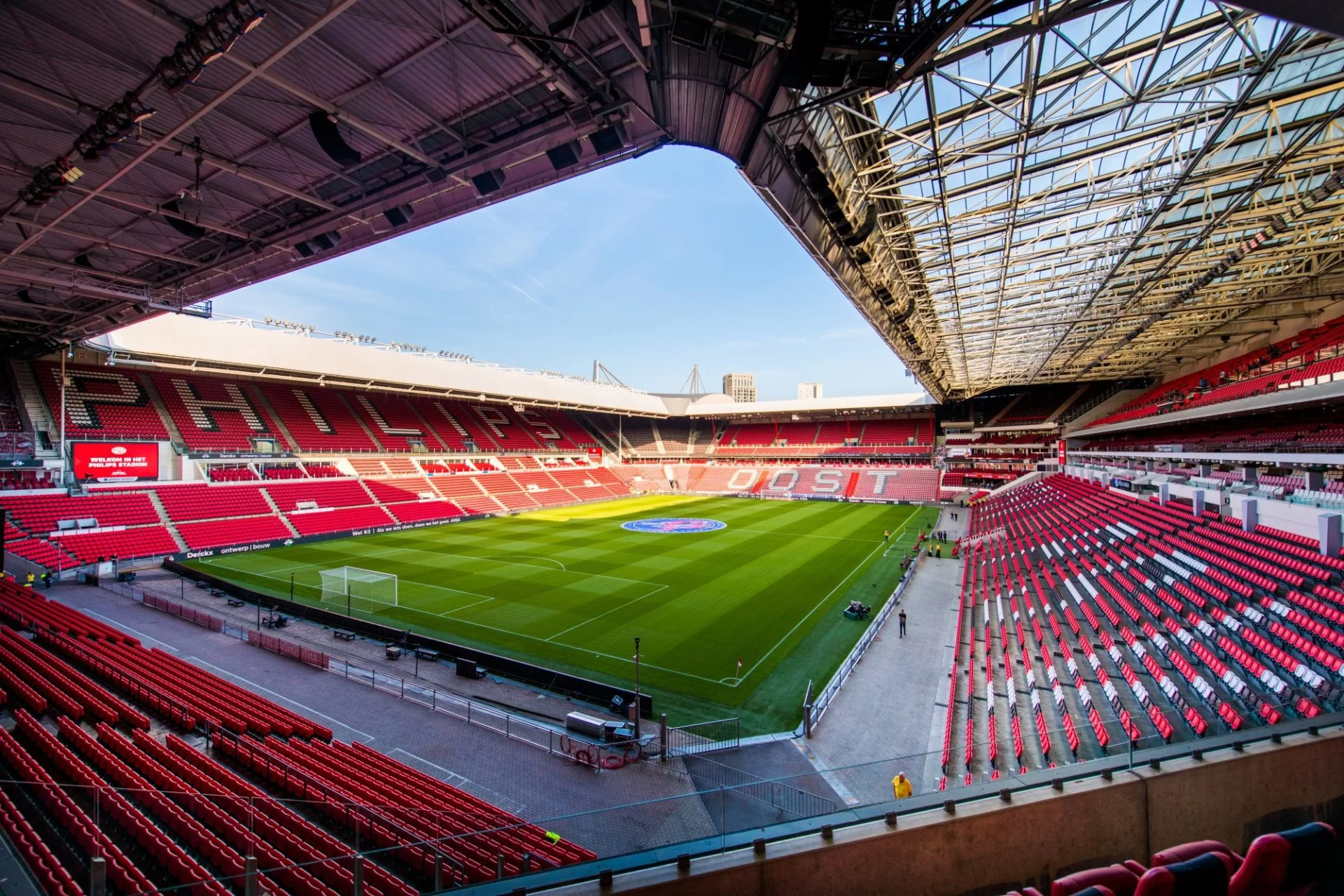
The Philips Stadium is easily accessible by car and public transport.
By car: Visitors can park in Parking Philips Stadion (accessible between 6:00 a.m. and 10:00 p.m., exit 24/7) or in the P Oost and P West parking lots, which are open 24/7.
By public transport: The stadium is within walking distance of two train stations. Eindhoven Central Station (10 minutes’ walk) and Strijp-S Station (15 minutes’ walk).


Pro-Q-Kine (Belgium) 10 points (general & sports)
Workshop From Assessment to Action
Using Technology for Rehabilitation & Performance
(Powered by VALD)
DATE & LOCATION
Wednesday 11 february 2026
Philips Stadion Eindhoven
Frediklaan 10A
5616 NH Eindhoven
Investment
€120,- euro per person
This includes:
- Accreditation points
- A certificate of participation
- Catering

Speakers

Andreas Bjerregaard is a Danish sports physiotherapist who has developed into an internationally recognized expert in the field of ACL rehabilitation in recent years. After completing his studies in physiotherapy and additional training in sports physiotherapy, he focused primarily on criteria-based rehabilitation and clinical decision-making regarding return to sport. His time at Aspetar in Doha played an important role in this: in this high-performance environment, he worked with top athletes and multidisciplinary teams and contributed to various clinical projects and publications. Parallel to his clinical work, Andreas expanded his own practices in Copenhagen, where he further refined his expertise in ACL care and developed a model with which he now supports therapists worldwide through online guidance. He is also active in research groups focusing on sports injuries, rehabilitation strategies, and functional assessments. As a speaker, Andreas is known for his clear, data-driven, and clinically applicable approach. He regularly gives courses and masterclasses on criteria-based ACL rehabilitation, motor control, return-to-sport criteria, and guiding complex sports rehabilitations. In his teaching, he combines scientific insights with practical tools that are directly applicable in the clinic.
He will discuss, among other topics:
- Criteria-based rehabilitation and progression
- Planning, conducting and interpreting strength, jump and performance assessments
- Practical guidance to support return-to-sport decision-making

Pedro Castellón Sánchez is a physical therapist with a strong background in sports rehabilitation, functional assessments, and performance analysis. After completing his physical therapy training, he joined several top sports organizations, including major international tournaments and national teams, where he was responsible for injury management, rehabilitation planning, and physical preparation. His expertise in testing and measurement systems led to a role in the technology-driven side of healthcare. From that position, he works on the implementation and interpretation of advanced strength and movement measurement systems in both elite sports and clinical settings. This has allowed him to build up a unique combination of clinical experience and technological knowledge, which he uses to help therapists and coaches make better decisions based on objective data. Pedro is a sought-after speaker at conferences and training courses in Europe and beyond. He is known for his pragmatic approach to criteria-based rehabilitation and his ability to translate complex biomechanical information into practical clinical interventions. Together with fellow experts, he has developed various course programs on ACL rehabilitation, return-to-sport decision-making, and the use of objective data in clinical practice.
He will discuss, among other topics:
- Criteria-based rehabilitation and progression
- Planning, conducting and interpreting strength, jump and performance assessments
- Practical guidance to support return-to-sport decision-making
Chris is a consultant physiotherapist specialising in the application of sports science technology and biomechanics to inform injury assessment, rehabilitation, and return-to-performance strategies for athletes. With more than 10 years experience in elite sport, he has supported athletes in Rugby League, British Athletics, and Team GB through the Olympic Games, World Championships, and Diamond League events, as well as athletes in professional football, rugby, and boxing. His clinical work focuses on hamstring and lower limb injury assessment and rehabilitation, using data-informed approaches to inform recovery and return-to-performance pathways. He developed biomechanics assessment services for elite sports teams, utilising force plates, 3D motion capture, and high-speed video analysis to assess athletes and inform rehabilitation planning. Chris’ research aligns with his clinical practice, focusing on the clinical application of biomechanics technology in rehabilitation and injury management, particularly in hamstring strain injuries, sprint mechanics, and running biomechanics. He has published multiple peer-reviewed articles in this area and speaks regularly at national and international conferences, sharing insights on integrating research into applied practice.
Key topics include:
-
VALD practitioner’s Guide for hamstring injuries: assessment and rehabilitation progression for hamstring injuries

Jermaine McCubbine is an experienced Strength & Conditioning coach with an academic background in sports science and performance coaching. He worked for many years within professional football organizations, where he was responsible for the physical preparation of elite players and the integration of rehabilitation within performance models. With an in-depth knowledge of football medicine and a strong foundation in data analysis, he developed into a modern ‘hybrid S&C coach’: someone who combines clinical rehabilitation, performance training, and monitoring. Within professional clubs, Jermaine played a key role in developing periodization models, load management strategies, and return-to-performance programs. His approach is characterized by close collaboration with medical and technical staff, in which he views rehabilitation and performance not as separate components but as a single integrated chain. Jermaine regularly speaks at international platforms about physical preparation in soccer, bridging rehabilitation to performance, and using data to better manage injury risks and performance trajectories. His style is described as energetic, practical, and strongly underpinned by experience at the highest level of the sport.
He will discuss, among other topics:
- How data is collected, structured and interpreted
- How benchmarks and reporting are used within technical and medical staff
- Which performance indicators guide periodisation
- How data-driven decisions lead to improved performance and reduced injury risk

Bart Dingenen is a physical therapist and researcher who is internationally recognized for his work in the field of ACL rehabilitation, movement analysis, and neuromuscular training. Drawing on his academic background, he has developed a clear vision of criteria-based rehabilitation, which focuses on functional progression, motor control, and dynamic load capacity. His scientific work has led to influential models and publications that are used by many clinics in the treatment of knee injuries. In addition to his research, Bart works in practice, where he guides athletes through complex rehabilitation programs. His approach combines detailed biomechanical knowledge with strong clinical intuition, making his programs both scientifically sound and practically applicable. He has extensive experience in designing exercise progressions, analyzing jumping and running mechanics, and guiding athletes in their return to competition level. As a teacher and speaker, Bart is active at international conferences, masterclasses, and online platforms. His presentations are known for their clarity and depth, in which he translates scientific evidence into concrete clinical strategies. This makes him a much sought-after expert in the world of sports rehabilitation.
He will discuss, among other topics:
- Neuromuscular and biomechanical factors that influence performance and injury risk
- Testing and assessment of athletes in dynamic, sport-specific situations
- Which parameters are truly relevant for monitoring progress
- How these insights translate into improved rehabilitation and performance programs
Workshop learning objectives
Learning objectiveTech-Driven Performance & Recovery
Describe the scientific and clinical foundations of technology-supported assessment and monitoring within rehabilitation and performance.Learning objectivePrecision in performance:
objective testingUse objective measurement tools (such as VALD strength and jump analysis systems: Force Plates, Force Frame & NordBord) to evaluate recovery, strength, asymmetry and performance.Learning objectiveFrom data to decision: evidence-based RTS
Apply scientific guidelines (including the Aspetar Clinical Practice Guideline for ACL Rehabilitation and the VALD Practitioner’s Guide to Hamstring Injuries) to clinical decision-making related to return-to-sport.Learning objectiveBiomechanics of the agility athlete
Interpret biomechanical and neuromuscular parameters within the context of functional testing for multidirectional athletes.Learning objectiveFrom data to field action
Translate data-driven insights into clinically relevant interventions for injury prevention, performance enhancement and safe return-to-sport.